Best-selling writer Elizabeth Bear blogs about when to quit working your manuscript.
Quote:
"They're all broken. Every one of them. Every novel I've published, every novel I've sold, every novel I've ever read has something wrong with it. Every novel I've ever loved is irretrievably [****]ing broken, all right?
Broken in ways that can't be fixed. It doesn't matter.
And no matter what you do, there will be people who dislike your work.
That's okay. In fact, I would venture to say that you can't write a book that some people will love unless there are also other people who will hate it. Strong emotion is not raised for the bland, my darlings."
Read the rest.
Monday, September 11, 2006


Tuesday, September 05, 2006
TERRA HEXA Books In A Book Club
 My first TERRA HEXA novel was picked up by Swedish publisher Wahlstroms' fantasy book-club (see brochure image), and the sequel TERRA HEXA II has been included in the book-club's selection (see other brochure image) for this year. Thank you, Wahlstroms.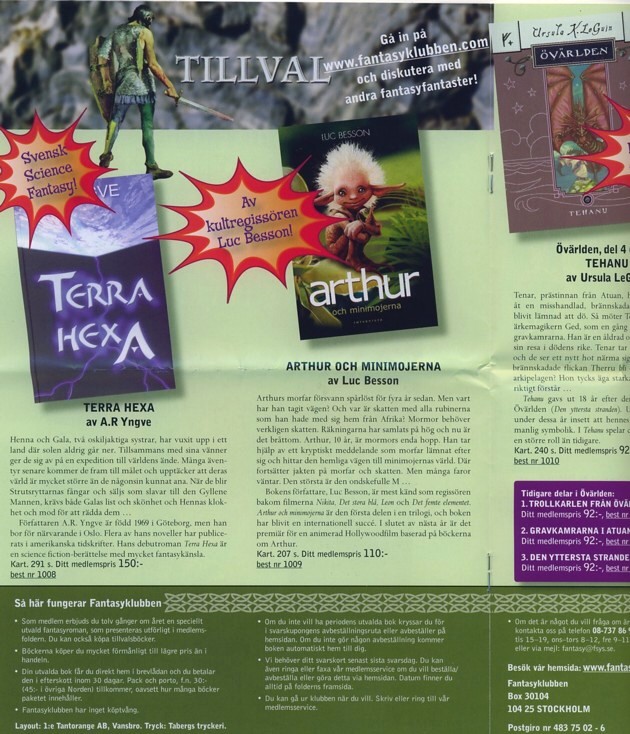
Monday, September 04, 2006
Jenn Reese On The "Growth Cycle of a Writer"
Read Jenn Reese's list "Growth Cycle of a Writer".
Where are YOU in the 8 stages of the writer's growth cycle?
(Personally, I feel like I'm bouncing around between Stage 5: Chrysalis and Stage 6: Awakening...)
Where are YOU in the 8 stages of the writer's growth cycle?
(Personally, I feel like I'm bouncing around between Stage 5: Chrysalis and Stage 6: Awakening...)
Sunday, September 03, 2006
"Oh No! We've Got Homepage Update Sign!"
Being a longtime fan of MST3K (Mystery Science Theater 3000) , I had a lot of fun when I read this MST3K-style "riff" of the infamous story THE EYE OF ARGON:
MSTing The Eye Of Argon
And to be honest, I'm a bit behind in my fiction-writing schedule. So in the spirit of my favorite TV comedy series, and in a desperate attempt to stall for time, I have made a MST3K-style "riff" on my own novel DARC AGES.
Snide comments and cheap jokes are inserted into the novel, as if some smartass was commenting on the story while you read. Without further ado, I give you...
The MSTing of DARC AGES
If you appreciate this kind of humor, and want me to continue the "MSTing" of DARC AGES, please drop me a note. :)
Thursday, August 31, 2006
How Writers Should Behave In Public
If you start to see a bit of recognition and success (and perhaps, eventually, some financial profit) as a writer, you will also discover a new and strange change in your life:
You have become two persons.
1. The Private You - the person who eats, sleeps, works, lives, goes to the bathroom and is pretty much like everybody else.
2. The Public You - the figure appearing in the media, who most people associate with your writer name/pseudonym.
Why is it important to keep these two roles apart? Why not simply insist, like Popeye, that "I yam what I yam and that's all I yam!"
Because you risk going insane.
Your "public persona" will be subjected to scrutiny of a kind that never happens to "ordinary" people. Complete strangers will make absurd claims about your personality as if they were close friends. This can be frustrating. If you do not explain to yourself, "They are talking about my public persona, a role, not the real private me," then you'll lose your grip of who you are.
Always assume about "well-known" people: "I don't really know this person. This is really a stranger to me."
Between the reader and the successful writer lies a veil of prejudices, hearsay, gossip, unrealistic expectations, fears, projections and desires. And the more successful a writer becomes, the worse this problem becomes.
Nobody expects Mr. Totally Unknown Writer to outdo himself with every new book. But Mrs. Bestselling Writer will always struggle against ever-rising expectations; no matter how well she does, someone will try to spin it that she's "not doing as well as expected" or is already a has-been.
Now, about the "public persona," the "you" who appears at conventions, book fairs, conferences and interviews.... I think that regardless of fame, it is possible to project a public "you" which combines parts of your genuine character with certain rules of conduct.
10 Rules of Thumb for your Public Persona:
1. Be sincere about your beliefs and convictions.
2. Avoid self-destructive behavior.
3. Be polite.
4. Be consistent.
5. Show a sense of humor (if you have any).
6. Do not lie.
7. Be considerate of other people's feelings (to a point).
8. Only lose your temper when no other recourse is possible.
9. Dress and groom your public persona with care.
10. Always keep your teeth clean and your breath fresh.
When I see photos of writers during various gatherings and functions, certain kinds of writers stand out from the crowd:
A) Those who are well groomed and smartly dressed;
B) Those who look like homeless people;
C) Those who have horrible beards.
What IS it about writers and beards?
In 90 cases out of 100, a beard does not make you look distinguished. Those few who do, look distinguished also without beards.
Big, stripy beards that seem like they're trying to escape your face are even worse.
Goatees should be reserved for the lead singer of Metallica.
A well-kept three-day stubble is OK, but four days marks the beginning of a beard.
Women's mustaches should be shaved at all times.
Shaving your head bald may work - but then again, only if you have a handsome cranium.
Keep a spare shirt available at public occasions. If you happen to spill something on your shirt, you don't want the big unsightly stain to follow you around the entire event.
Some people sweat a lot. (I'm one of them.) Industrial-strength deodorant, black shirts and frequent face-wiping might lessen the impression that you're enacting "Richard Nixon Losing His TV Debate Against JFK."
And please, do not grope women on stage.
You have become two persons.
1. The Private You - the person who eats, sleeps, works, lives, goes to the bathroom and is pretty much like everybody else.
2. The Public You - the figure appearing in the media, who most people associate with your writer name/pseudonym.
Why is it important to keep these two roles apart? Why not simply insist, like Popeye, that "I yam what I yam and that's all I yam!"
Because you risk going insane.
Your "public persona" will be subjected to scrutiny of a kind that never happens to "ordinary" people. Complete strangers will make absurd claims about your personality as if they were close friends. This can be frustrating. If you do not explain to yourself, "They are talking about my public persona, a role, not the real private me," then you'll lose your grip of who you are.
Always assume about "well-known" people: "I don't really know this person. This is really a stranger to me."
Between the reader and the successful writer lies a veil of prejudices, hearsay, gossip, unrealistic expectations, fears, projections and desires. And the more successful a writer becomes, the worse this problem becomes.
Nobody expects Mr. Totally Unknown Writer to outdo himself with every new book. But Mrs. Bestselling Writer will always struggle against ever-rising expectations; no matter how well she does, someone will try to spin it that she's "not doing as well as expected" or is already a has-been.
Now, about the "public persona," the "you" who appears at conventions, book fairs, conferences and interviews.... I think that regardless of fame, it is possible to project a public "you" which combines parts of your genuine character with certain rules of conduct.
10 Rules of Thumb for your Public Persona:
1. Be sincere about your beliefs and convictions.
2. Avoid self-destructive behavior.
3. Be polite.
4. Be consistent.
5. Show a sense of humor (if you have any).
6. Do not lie.
7. Be considerate of other people's feelings (to a point).
8. Only lose your temper when no other recourse is possible.
9. Dress and groom your public persona with care.
10. Always keep your teeth clean and your breath fresh.
When I see photos of writers during various gatherings and functions, certain kinds of writers stand out from the crowd:
A) Those who are well groomed and smartly dressed;
B) Those who look like homeless people;
C) Those who have horrible beards.
What IS it about writers and beards?
In 90 cases out of 100, a beard does not make you look distinguished. Those few who do, look distinguished also without beards.
Big, stripy beards that seem like they're trying to escape your face are even worse.
Goatees should be reserved for the lead singer of Metallica.
A well-kept three-day stubble is OK, but four days marks the beginning of a beard.
Women's mustaches should be shaved at all times.
Shaving your head bald may work - but then again, only if you have a handsome cranium.
Keep a spare shirt available at public occasions. If you happen to spill something on your shirt, you don't want the big unsightly stain to follow you around the entire event.
Some people sweat a lot. (I'm one of them.) Industrial-strength deodorant, black shirts and frequent face-wiping might lessen the impression that you're enacting "Richard Nixon Losing His TV Debate Against JFK."
And please, do not grope women on stage.
Sunday, August 27, 2006
Now Let Us Praise Homepage Updates
This week's homepage update is small... but not insignificant: the 13th installment of my ongoing serial of satirical verse, "A.R.Yngve's READING BOOK".
Chapter 13 is titled "Men In Uniform"... have a look.
Chapter 13 is titled "Men In Uniform"... have a look.
Saturday, August 26, 2006
Snappy Dialogue Or Cliché Hell?
Some sample dialogue from the Precinct 20 story I'm writing on:
------------------
They went to the local McDonald’s. She ordered a burger, salad and coffee; he ordered three Filet’O Fish, salad, a mug of coffee and ice cream.
“Your stomach must be made of pig-iron,” she remarked as Garris began to eat.
“You’re not scolding me for eating after a colleague just died?”
“I think you’re into comfort food. You didn’t drink much at the party.”
“So what’s your vice?” he said, and gulped down the last bite of his first fish burger.
Her face froze momentarily. Then, with a wry smile: “I’d never tell a colleague.”
-------------------
Yes, I know people don't talk like that in real life. But kitchen-sink realism can only get a story so far.
------------------
They went to the local McDonald’s. She ordered a burger, salad and coffee; he ordered three Filet’O Fish, salad, a mug of coffee and ice cream.
“Your stomach must be made of pig-iron,” she remarked as Garris began to eat.
“You’re not scolding me for eating after a colleague just died?”
“I think you’re into comfort food. You didn’t drink much at the party.”
“So what’s your vice?” he said, and gulped down the last bite of his first fish burger.
Her face froze momentarily. Then, with a wry smile: “I’d never tell a colleague.”
-------------------
Yes, I know people don't talk like that in real life. But kitchen-sink realism can only get a story so far.
Thursday, August 24, 2006
How Do You Choose What To Read?
There's the Gutenberg Project, with an online catalog of over 18,000 free books (and growing, as ever more old books enter the Public Domain)...
There's Amazon.com, the world's biggest (and most accessible) bookstore...
There's all the good, established authors who are not only releasing a lot of new novels, but also releasing older books for free reading online...
And in addition to that, there are so many well-stocked bookshops near you - in train stations, shopping centers, convenience stores, and kiosks.
So I ask you, the average reader: How do you do it? Faced with this fantastic range of available books, all old books plus the recent and present ones... how do you choose what to read? More and more, I'm being overwhelmed by all this limitless choice.
And I'm starting to seriously wonder if it's pointless that I should write new fiction, when I'll have to compete with both the sum of all books written plus the flood of other new releases.
How do you do it? Please tell.
:-S
There's Amazon.com, the world's biggest (and most accessible) bookstore...
There's all the good, established authors who are not only releasing a lot of new novels, but also releasing older books for free reading online...
And in addition to that, there are so many well-stocked bookshops near you - in train stations, shopping centers, convenience stores, and kiosks.
So I ask you, the average reader: How do you do it? Faced with this fantastic range of available books, all old books plus the recent and present ones... how do you choose what to read? More and more, I'm being overwhelmed by all this limitless choice.
And I'm starting to seriously wonder if it's pointless that I should write new fiction, when I'll have to compete with both the sum of all books written plus the flood of other new releases.
How do you do it? Please tell.
:-S
Saturday, August 19, 2006
Stuff I'm Writing...
I'm writing on several things right now:
-Work on my "Military SF" novel THE TALE OF THE SOLDIESSE is going very slowly. At least I have written over 70,000 words so far...
-I just completed a new short story (2,900 words) and sent it to this new zine. It got rejected about five hours later - a new personal record! - and I'm wondering whether I should rewrite it or toss it.
-Another "Precinct 20" horror-mystery story in progress, "Natural Enemy," is turning out much longer than I thought -- primarily because it involves more character development and scene-setting than previous stories in the cycle.
Perhaps I'll split it into two parts...
(I am already thinking of creating a chapbook collection of all the "Precinct 20" stories, to be sold here.)
-The third TERRA HEXA novel is still in the early planning stages. I am trying to figure out how much plot I should cram into it -- I have a tendency to put in a lot of plot.
I recently saw TRISTRAM SHANDY: A COCK AND BULL STORY, the film based on the comic novel (or "meta-novel"). Great fun! See it.
-Work on my "Military SF" novel THE TALE OF THE SOLDIESSE is going very slowly. At least I have written over 70,000 words so far...
-I just completed a new short story (2,900 words) and sent it to this new zine. It got rejected about five hours later - a new personal record! - and I'm wondering whether I should rewrite it or toss it.
-Another "Precinct 20" horror-mystery story in progress, "Natural Enemy," is turning out much longer than I thought -- primarily because it involves more character development and scene-setting than previous stories in the cycle.
Perhaps I'll split it into two parts...
(I am already thinking of creating a chapbook collection of all the "Precinct 20" stories, to be sold here.)
-The third TERRA HEXA novel is still in the early planning stages. I am trying to figure out how much plot I should cram into it -- I have a tendency to put in a lot of plot.
I recently saw TRISTRAM SHANDY: A COCK AND BULL STORY, the film based on the comic novel (or "meta-novel"). Great fun! See it.
Friday, August 04, 2006
Charlie Stross On Genre And Zeitgeist
The awarded and lauded science-fiction writer Charlie Stross has an interesting post on his weblog: "Genre Neurosis 101."
The central thesis of the post (and do read the debate in the Comments section) is that after the terrorist attacks on the U.S. on September 11, 2001, American Science Fiction lost some (or much?) of its previous optimism about the future.
Stross notes:
"This turning away from the near future is going to be remembered as one of the hallmarks of the post-9/11 decade in American science fiction, as the chill wind of change blows through the hitherto cosy drawing room of the American century.
"The Brits aren't drinking the Kool-Aid — well, some of them are serving it up in pint glasses, but most of them have got better things to do with their time — and this is why just about all the reviewers in the field are yammering about a British Invasion or a British New Wave or something: it's not what the British are doing, but what the American writers aren't doing that is interesting. "
Read the rest.
What about countries that are not only lacking in optimism, but have none at all? Are there any active SF writers in, say, Iraq? (Or North Korea? Or Sudan?) I'd love to learn about people who try to write science fiction in the countries where you'd least expect it...
The central thesis of the post (and do read the debate in the Comments section) is that after the terrorist attacks on the U.S. on September 11, 2001, American Science Fiction lost some (or much?) of its previous optimism about the future.
Stross notes:
"This turning away from the near future is going to be remembered as one of the hallmarks of the post-9/11 decade in American science fiction, as the chill wind of change blows through the hitherto cosy drawing room of the American century.
"The Brits aren't drinking the Kool-Aid — well, some of them are serving it up in pint glasses, but most of them have got better things to do with their time — and this is why just about all the reviewers in the field are yammering about a British Invasion or a British New Wave or something: it's not what the British are doing, but what the American writers aren't doing that is interesting. "
Read the rest.
What about countries that are not only lacking in optimism, but have none at all? Are there any active SF writers in, say, Iraq? (Or North Korea? Or Sudan?) I'd love to learn about people who try to write science fiction in the countries where you'd least expect it...
Tuesday, August 01, 2006
On Mel Gibson And Evil Stories
Mel, this is God: What the hell were you thinking?
Jokes aside... I don't think being a drunk, or even a pampered celebrity drunk, is any excuse for vile bigotry. "In vino veritas," and this sure confirms any suspicions raised by that icky film THE WHIPPING OF THE CHRIST -- sorry, THE PASSION OF THE TORTURER.
(By the way, my mother -- who comes from a Catholic family and volunteers for a church charity in her retirement -- thought THE PASSION OF THE CHRIST was a sick movie. I agreed: it was an exercise in sadism that completely missed the point of what Jesus preached.)
One dark truth about any sort of creative endeavor -- such as writing -- is that anger can be a driving force. Even hate.
I'll admit that some of my own books and stories were written in anger. (Anger against corruption in politics, against war, bigotry, oppression and stupidity...) Authorial fury is no guarantee of quality -- rather the opposite -- but a big psychic "push" of anger can fuel the writer and make him or her accomplish more than usual.
But what happens when the hate overwhelms the work -- or the artisan? (I don't want to use the word "artist" here because it's so loaded with pretensions.) When does the creative passion go too far and become downright pathological? Can stories hurt people?
They can.
There are books that should never have been written -- evil stories that contain evil messages and try to poison the reader with hate. Many political and religious pamphlets are of that sort. But you can also find evil in fiction -- myths masquerading as fact, stories claiming to be based on fact, stories that warp history to suit a bigoted agenda.
One particularly evil type of fiction is the "scapegoat myth":
1. Some atrocity, wrong or slight is committed against a people tagged as "good." (Not because they do good things, they just are.)
2. The "good" people quickly find that they have been wronged by representatives of another people, who are somehow, magically, a single entity -- and therefore all equally responsible for the wrong.
(This blame extends to those who have no knowledge of the deed, or were born after the wrong was done, but are related to the "guilty" people.)
3. The "good" people, having thus justified themselves, try their hardest to persecute and annihilate the "scapegoat" people.
Scapegoat myths are toxic: they have killed people throughout human history, and still do.
I'm convinced that our species has evolved from hairier and stupider primates, and that we share many of the worst traits of chimps. So I've come to suspect that "scapegoating" derives from ape behavior. Anyone who writes or tells stories that spread scapegoat myths, tries to tempt us: "Don't think. Just find the weaker opponent, kill him and take his females. Your might is your right."
Deep down, the bigot who spouts myths about "evil peoples" longs to cast off his humanity and become an ape -- a murderous, unrepentant primate. Do not listen to his stories. Do not read them. They are evil.
--------
ADDENDUM: Denis Leary sings the "Mel Gibson Blues" (Caution: explicit lyrics, but this is humor, satire... don't listen if you don't understand satire.)
Jokes aside... I don't think being a drunk, or even a pampered celebrity drunk, is any excuse for vile bigotry. "In vino veritas," and this sure confirms any suspicions raised by that icky film THE WHIPPING OF THE CHRIST -- sorry, THE PASSION OF THE TORTURER.
(By the way, my mother -- who comes from a Catholic family and volunteers for a church charity in her retirement -- thought THE PASSION OF THE CHRIST was a sick movie. I agreed: it was an exercise in sadism that completely missed the point of what Jesus preached.)
One dark truth about any sort of creative endeavor -- such as writing -- is that anger can be a driving force. Even hate.
I'll admit that some of my own books and stories were written in anger. (Anger against corruption in politics, against war, bigotry, oppression and stupidity...) Authorial fury is no guarantee of quality -- rather the opposite -- but a big psychic "push" of anger can fuel the writer and make him or her accomplish more than usual.
But what happens when the hate overwhelms the work -- or the artisan? (I don't want to use the word "artist" here because it's so loaded with pretensions.) When does the creative passion go too far and become downright pathological? Can stories hurt people?
They can.
There are books that should never have been written -- evil stories that contain evil messages and try to poison the reader with hate. Many political and religious pamphlets are of that sort. But you can also find evil in fiction -- myths masquerading as fact, stories claiming to be based on fact, stories that warp history to suit a bigoted agenda.
One particularly evil type of fiction is the "scapegoat myth":
1. Some atrocity, wrong or slight is committed against a people tagged as "good." (Not because they do good things, they just are.)
2. The "good" people quickly find that they have been wronged by representatives of another people, who are somehow, magically, a single entity -- and therefore all equally responsible for the wrong.
(This blame extends to those who have no knowledge of the deed, or were born after the wrong was done, but are related to the "guilty" people.)
3. The "good" people, having thus justified themselves, try their hardest to persecute and annihilate the "scapegoat" people.
Scapegoat myths are toxic: they have killed people throughout human history, and still do.
I'm convinced that our species has evolved from hairier and stupider primates, and that we share many of the worst traits of chimps. So I've come to suspect that "scapegoating" derives from ape behavior. Anyone who writes or tells stories that spread scapegoat myths, tries to tempt us: "Don't think. Just find the weaker opponent, kill him and take his females. Your might is your right."
Deep down, the bigot who spouts myths about "evil peoples" longs to cast off his humanity and become an ape -- a murderous, unrepentant primate. Do not listen to his stories. Do not read them. They are evil.
--------
ADDENDUM: Denis Leary sings the "Mel Gibson Blues" (Caution: explicit lyrics, but this is humor, satire... don't listen if you don't understand satire.)
Sunday, July 30, 2006
The Never Ending Story ("Aaaa-ah, aaa-ah, aa-ah...")
Nothing upsets a reader as much as a book that doesn't end on the last page.
Nothing upsets a viewer as much as a motion-picture that is abruptly cut off before the story ends properly.
If an episode of COLUMBO stopped before Lt. Columbo had solved the case, I would be upset.
But... have you ever wondered? Why do we expect a story to neatly fit into the limits of
A) the 200-500 pages of a single book
B) the 50-60 minute duration of a single TV-show episode
C) a 90-120 minute movie?
D) a stageplay lasting 1-4 hours?
(No offense to Lt. Columbo, but how does he ALWAYS manage to solve a case in 3-5 days? Many murder cases take months, years, even decades to crack.)
Real life won't fit into a 90-minute movie.
The practical explanation is that most media - such as print, movies on film rolls and television - impose strict boundaries on the story's length. The full complexity of life is simplified and abridged for the sake of the medium. (Again with the McLuhan reference!)
You won't find single 10,000-page novels in the bookshop, because the publishing industry can't physically print, edit and distribute a book that's 1 meter thick and weighs 10 kilos. If you wanted to tell a story which required that length, you'd have to break it up into several volumes - and even that wouldn't be without its problems.
Also, the reader's patience and stamina impose limits to story length. If you've ever sat through a "Director's Cut" movie, and had to go to the bathroom during the middle of the film, you know what I mean.
And of course, the author's patience with a single story isn't limitless either.
In practical terms for the individual writer, you may have run into the Limit Problem when you try to cram too much plot into a 100,000-word novel. (I have!) Consider breaking up your plot into individual novels. You don't like doing so? Well, what can you do? Even J.R.R. Tolkien had to see his first U.S. printing of THE LORD OF THE RINGS broken up into three books.
However...
Digital technology now makes it possible to make stories - novels, motion pictures, comic-strips (see Scott McCloud's "Carl") of greatly extended length and complexity.
You could - if you were ambitious or mad enough - post an incomplete book online, and just keep adding to its length for the rest of your life... until, with your very last breath, you completed it with the ending.
("Behold: The World's Longest Novel! Bigger than The Bible! Longer than War And Peace! Lengthier than *GAAGHH*....")
Or, if you were utterly insane, you could digitally cut-and-paste together every single episode of the TV soap DALLAS into a single, gigantic movie ("DALLAS - THE COMPLETE SAGA") and post it online. Behold, the world's longest film!
Then again... most writers barely muster a single 100,000-word novel. So why should they worry about the Limit Problem?
One worry is Posterity. Many of the ancient classics of literature are probably surviving fragments of even bigger epics. THE ILIAD and THE ODYSSEY seem to end abruptly, but we can't say for sure the Greeks ended the story of Odysseys when he returned to Ithaca.
Perhaps the Internet will give birth to Never Ending Stories... movies and books that get extended endlessly, over entire generations.
And here this blogpost runs into a Limit Problem of its own... so I should stop here.
Nothing upsets a viewer as much as a motion-picture that is abruptly cut off before the story ends properly.
If an episode of COLUMBO stopped before Lt. Columbo had solved the case, I would be upset.
But... have you ever wondered? Why do we expect a story to neatly fit into the limits of
A) the 200-500 pages of a single book
B) the 50-60 minute duration of a single TV-show episode
C) a 90-120 minute movie?
D) a stageplay lasting 1-4 hours?
(No offense to Lt. Columbo, but how does he ALWAYS manage to solve a case in 3-5 days? Many murder cases take months, years, even decades to crack.)
Real life won't fit into a 90-minute movie.
The practical explanation is that most media - such as print, movies on film rolls and television - impose strict boundaries on the story's length. The full complexity of life is simplified and abridged for the sake of the medium. (Again with the McLuhan reference!)
You won't find single 10,000-page novels in the bookshop, because the publishing industry can't physically print, edit and distribute a book that's 1 meter thick and weighs 10 kilos. If you wanted to tell a story which required that length, you'd have to break it up into several volumes - and even that wouldn't be without its problems.
Also, the reader's patience and stamina impose limits to story length. If you've ever sat through a "Director's Cut" movie, and had to go to the bathroom during the middle of the film, you know what I mean.
And of course, the author's patience with a single story isn't limitless either.
In practical terms for the individual writer, you may have run into the Limit Problem when you try to cram too much plot into a 100,000-word novel. (I have!) Consider breaking up your plot into individual novels. You don't like doing so? Well, what can you do? Even J.R.R. Tolkien had to see his first U.S. printing of THE LORD OF THE RINGS broken up into three books.
However...
Digital technology now makes it possible to make stories - novels, motion pictures, comic-strips (see Scott McCloud's "Carl") of greatly extended length and complexity.
You could - if you were ambitious or mad enough - post an incomplete book online, and just keep adding to its length for the rest of your life... until, with your very last breath, you completed it with the ending.
("Behold: The World's Longest Novel! Bigger than The Bible! Longer than War And Peace! Lengthier than *GAAGHH*....")
Or, if you were utterly insane, you could digitally cut-and-paste together every single episode of the TV soap DALLAS into a single, gigantic movie ("DALLAS - THE COMPLETE SAGA") and post it online. Behold, the world's longest film!
Then again... most writers barely muster a single 100,000-word novel. So why should they worry about the Limit Problem?
One worry is Posterity. Many of the ancient classics of literature are probably surviving fragments of even bigger epics. THE ILIAD and THE ODYSSEY seem to end abruptly, but we can't say for sure the Greeks ended the story of Odysseys when he returned to Ithaca.
Perhaps the Internet will give birth to Never Ending Stories... movies and books that get extended endlessly, over entire generations.
And here this blogpost runs into a Limit Problem of its own... so I should stop here.
Friday, July 21, 2006
On "Unspoken Assumptions" In Writing
The late great Alice Sheldon (a.k.a. "James Tiptree Jr.") wrote this observation about how male writers tend to describe reality with themselves as point-of-reference: "Impenetrable Swamps, Loyal Dogs, Short Women". Read the whole text!
Quote:
"Consider how odd it would be if all we knew about elephants had been written by elephants. Would we recognise one? What elephant author would describe — or perhaps even perceive — the features which are common to all elephants?
"We would find ourselves detecting these from indirect clues; for instance, elephant-naturalists would surely tell us that all other animals suffer from noselessness, which obliges them to use their paws in an unnatural way."
Think about it when you write, whatever your gender may be. Are you putting unspoken assumptions into your prose?
Are forests always supposed to be "penetrated"?
Are dogs always supposed to be "loyal"(i.e. obedient)? "Loyalty" implies the dog is loyal to someone. Who?
What constitutes a "short" woman? (Relative to what?)
OK, if the narrator is a 7-foot Ethiopian native and casually thinks the visiting Japanese tourist is short, that makes perfect sense within the context of the story.
But the writer shouldn't automatically assume that his/her reference point always makes sense in the context of the narrative.
Another example (my favorite): In one of Jean M. Auel's Stone Age novels, one of the characters talk about someone being depressed. Depressed? 40,000 years ago? The mere word carries assumptions about modern psychology, models of the human mind and theories which seem a tad out of place in the story's Neolithic, pre-literate context.
It can be difficult to picture yourself as being someone else, to describe someone else's point-of-view. It may even require that you question some (or all) of your assumptions about yourself.
But if you can't, your writing will always be limited to a predictable, repetitive set of ideas and prejudices - invisible to you, but obvious to everyone who reads your prose.
Quote:
"Consider how odd it would be if all we knew about elephants had been written by elephants. Would we recognise one? What elephant author would describe — or perhaps even perceive — the features which are common to all elephants?
"We would find ourselves detecting these from indirect clues; for instance, elephant-naturalists would surely tell us that all other animals suffer from noselessness, which obliges them to use their paws in an unnatural way."
Think about it when you write, whatever your gender may be. Are you putting unspoken assumptions into your prose?
Are forests always supposed to be "penetrated"?
Are dogs always supposed to be "loyal"(i.e. obedient)? "Loyalty" implies the dog is loyal to someone. Who?
What constitutes a "short" woman? (Relative to what?)
OK, if the narrator is a 7-foot Ethiopian native and casually thinks the visiting Japanese tourist is short, that makes perfect sense within the context of the story.
But the writer shouldn't automatically assume that his/her reference point always makes sense in the context of the narrative.
Another example (my favorite): In one of Jean M. Auel's Stone Age novels, one of the characters talk about someone being depressed. Depressed? 40,000 years ago? The mere word carries assumptions about modern psychology, models of the human mind and theories which seem a tad out of place in the story's Neolithic, pre-literate context.
It can be difficult to picture yourself as being someone else, to describe someone else's point-of-view. It may even require that you question some (or all) of your assumptions about yourself.
But if you can't, your writing will always be limited to a predictable, repetitive set of ideas and prejudices - invisible to you, but obvious to everyone who reads your prose.
Thursday, July 20, 2006
The Medium Is... The Massage?
When I first started to post my fiction on a webpage, I had a vague idea that maybe the text could become available also for mobile phones...
Around 2000 I made an early experimental "sampling" of my fiction for mobile phones - with black-and-white screens, before the Internet became available on those devices. It looked awful, so I decided to set mobile phones aside until the technology and software had improved...
...and boy, has it improved.
Today a friend showed me what my homepage looks like on a state-of-the-art Qtek 8310 smartphone, using the Web browser Opera Mini.
He could set the size of the text to whatever suited him.
Wide images were automatically resized to fit the screen.
The screen resolution was crisp and clear.
It amazed me how good the webpage looked on that small 240x320 display.
I looked at the screen and thought: Soon, this will be the standard for all mobile phones. People will be using them instead of PCs to read books.
When I ask people what they think about reading fiction from a screen - any screen - I still encounter a widespread skepticism against it.
Maybe people take a pragmatic "I'll-believe-it-when-I-see-it" attitude. Or maybe they have been burned by bad experiences with flickering cathode-ray screens... I don't know and I don't care. I have seen the future.
So: what does the mobile-phone-as-book-reading-device imply for writers?
For starters, any specific medium has its own strengths and weaknesses. (Printed books have many weaknesses, but they've been around for so many hundreds of years that we've become accustomed to the weaknesses.)
The obvious strengths of writing fiction for a mobile phone, of the top off my head, would be:
1. Eliminate the middlemen (editor, bookstore, publisher, printer, distributor, access to PC) - the writer reaches the reader directly and (almost) instantly, even where bookstores are scant or non-available.
2. Instant editing - if you find an error in your text after it's been posted, or think you it needs some on-the-spot editing, you do it right away... and the update reaches the reader immediately.
3. The mobile format is well suited for short fiction - the mobile reader will hardly be able to read through WAR AND PEACE without being interrupted by phonecalls, text-messages and conversations... But if the story is short enough, time won't be an issue.
4. The mobile format is well suited for serials - in the 19th and early 20th century, it was typical of novels to be published as serials (in magazines and newspapers) before they were released as complete print books.
The serial, with its cliffhangers and "To Be Continued"s, could get a renaissance on mobile devices. (Thanks to L. Lee Lowe for the correction.)
Of course, the medium has its weaknesses, but they are not a big problem unless you think of it as just another form of paper books. It is not. When television was new, it took the producers some time to figure out how TV was different from radio. Old TV shows often featured an announcer's voice-over, an old cliché from radio broadcasts.
I think that as people try to figure out how to present fiction on mobile devices, they will go through a phase of repeating clichés from an older medium... and only in retrospect will we see it clearly.
"How silly the first books for phones seem now, what with their digital dust jackets and imaginary page numbers!"
If you have a new phone with a large screen (and a good browser), check out this page...
If you have an older phone model with a small screen, there's a mobile version...
And if you have a phone with a black-and-white screen, buy a new phone.
ADDENDUM: For further study of the logistical and financial problems with distributing fiction magazines in print, read Vic Wertz' fascinating article "Why Amazing Stories and Undefeated died"...
...then tell me again how fantastically superior that system is to electronic distribution.
Around 2000 I made an early experimental "sampling" of my fiction for mobile phones - with black-and-white screens, before the Internet became available on those devices. It looked awful, so I decided to set mobile phones aside until the technology and software had improved...
...and boy, has it improved.
Today a friend showed me what my homepage looks like on a state-of-the-art Qtek 8310 smartphone, using the Web browser Opera Mini.
He could set the size of the text to whatever suited him.
Wide images were automatically resized to fit the screen.
The screen resolution was crisp and clear.
It amazed me how good the webpage looked on that small 240x320 display.
I looked at the screen and thought: Soon, this will be the standard for all mobile phones. People will be using them instead of PCs to read books.
When I ask people what they think about reading fiction from a screen - any screen - I still encounter a widespread skepticism against it.
Maybe people take a pragmatic "I'll-believe-it-when-I-see-it" attitude. Or maybe they have been burned by bad experiences with flickering cathode-ray screens... I don't know and I don't care. I have seen the future.
So: what does the mobile-phone-as-book-reading-device imply for writers?
For starters, any specific medium has its own strengths and weaknesses. (Printed books have many weaknesses, but they've been around for so many hundreds of years that we've become accustomed to the weaknesses.)
The obvious strengths of writing fiction for a mobile phone, of the top off my head, would be:
1. Eliminate the middlemen (editor, bookstore, publisher, printer, distributor, access to PC) - the writer reaches the reader directly and (almost) instantly, even where bookstores are scant or non-available.
2. Instant editing - if you find an error in your text after it's been posted, or think you it needs some on-the-spot editing, you do it right away... and the update reaches the reader immediately.
3. The mobile format is well suited for short fiction - the mobile reader will hardly be able to read through WAR AND PEACE without being interrupted by phonecalls, text-messages and conversations... But if the story is short enough, time won't be an issue.
4. The mobile format is well suited for serials - in the 19th and early 20th century, it was typical of novels to be published as serials (in magazines and newspapers) before they were released as complete print books.
The serial, with its cliffhangers and "To Be Continued"s, could get a renaissance on mobile devices. (Thanks to L. Lee Lowe for the correction.)
Of course, the medium has its weaknesses, but they are not a big problem unless you think of it as just another form of paper books. It is not. When television was new, it took the producers some time to figure out how TV was different from radio. Old TV shows often featured an announcer's voice-over, an old cliché from radio broadcasts.
I think that as people try to figure out how to present fiction on mobile devices, they will go through a phase of repeating clichés from an older medium... and only in retrospect will we see it clearly.
"How silly the first books for phones seem now, what with their digital dust jackets and imaginary page numbers!"
If you have a new phone with a large screen (and a good browser), check out this page...
If you have an older phone model with a small screen, there's a mobile version...
And if you have a phone with a black-and-white screen, buy a new phone.
ADDENDUM: For further study of the logistical and financial problems with distributing fiction magazines in print, read Vic Wertz' fascinating article "Why Amazing Stories and Undefeated died"...
...then tell me again how fantastically superior that system is to electronic distribution.
Wednesday, July 12, 2006
"The Clockwork Atom Bomb" By Dominic Green
There are plenty of Hugo Award-nominated stories to read for free on the Internet right now, but why not start with this one:
Dominic Green's "The Clockwork Atom Bomb".
I liked it -- though it scared the crap out of me.
Dominic Green's "The Clockwork Atom Bomb".
I liked it -- though it scared the crap out of me.
Tuesday, July 04, 2006
"In The Summertime, When The Updates Are Late..."
This week's (late) homepage update includes the 1st chapter of DARC AGES: City Of Masks.
And if you want a laugh, I've added a very funny link to the links page.
And if you want a laugh, I've added a very funny link to the links page.
Saturday, June 10, 2006
TERRA HEXA II Released
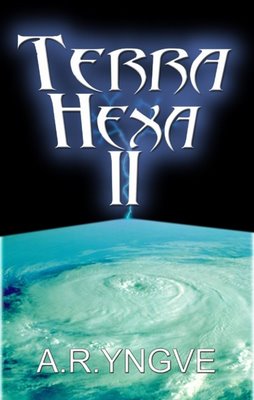
The sequel to my young-adult SF novel TERRA HEXA, aptly titled TERRA HEXA II, has just been released in Sweden.
A sample has been posted on the publisher's website, HERE.
If you can't read Swedish, there are English text and audio samples from the first book HERE.
The sequel features the female protagonists from the first Terra Hexa novel, the sisters Henna and Gala. They explore the planet Terra Hexa's third continent, and confront a terrible invisible menace...
If you want to know more, you'll have to buy the book. ;-)
Thursday, June 08, 2006
My FLICKR page
I started a Flickr page and put some photos on it.
And why? For the crass reason that I might get more attention for my books, by mugging for the camera.
;-)
And why? For the crass reason that I might get more attention for my books, by mugging for the camera.
;-)
Friday, June 02, 2006
Tragedy Is Easy, Comedy Is #¤%*#*¤ Hard
I've volunteered to do a standup-comedy act at the science-fiction convention NORCON (June 3-5)...
It's hard to be funny on purpose. And much easier to be unintentionally funny (as I've accomplished countless times).
Someone warned me: the convention guests won't be able to take you seriously as a writer AFTER they see you as a goofy funnyman on stage.
Who knows... ;-)
What do you think? I write "genre" fiction, so I don't have that much of a reputation to ruin in the first place...
If a Really Serious Writer like Margaret Atwood appeared on a comedy club and made fart jokes, would people then say: "I can't read her books now. She's ruined her image!"
Is it all about image?
Then again: Why should writers take themselves so #*#¤%* seriously?
The worst that can happen is that the audience won't laugh...
:)
It's hard to be funny on purpose. And much easier to be unintentionally funny (as I've accomplished countless times).
Someone warned me: the convention guests won't be able to take you seriously as a writer AFTER they see you as a goofy funnyman on stage.
Who knows... ;-)
What do you think? I write "genre" fiction, so I don't have that much of a reputation to ruin in the first place...
If a Really Serious Writer like Margaret Atwood appeared on a comedy club and made fart jokes, would people then say: "I can't read her books now. She's ruined her image!"
Is it all about image?
Then again: Why should writers take themselves so #*#¤%* seriously?
The worst that can happen is that the audience won't laugh...
:)
Thursday, June 01, 2006
Book Tip...
I love non-fiction books just as much as good fiction, and I read lots of it.
And as I get older and the world changes ever faster, it gets increasingly important to stay informed. I'm still "hip" and "with it", "Daddy-O"! ;-)
Here are two interesting books I read recently...
PURPLE COW by Seth Godin
Seth Godin is a "marketing guru". His book explains how the game of marketing has changed, and how you can use this knowledge to create successful products and services.
So why should writers and aspiring writers learn about such things?
One: PURPLE COW may help you figure out how to sell your own books.
Two: It also points out the power of originality and creativity in a media-crowded, affluent society.
ON SF by Thomas M. Disch
Disch is also a fiction writer and has worked in various genres (his greatest success may be THE BRAVE LITTLE TOASTER childrens' books). This book is a collection of his literary criticism.
"Literary criticism," you think. "That sounds so dull." But Disch's writing is damn funny. He often attacks his subject from an unusual angle, offers original insights.. and is one of the funniest literary critics around. You learn something and laugh at the same time.
And as I get older and the world changes ever faster, it gets increasingly important to stay informed. I'm still "hip" and "with it", "Daddy-O"! ;-)
Here are two interesting books I read recently...
PURPLE COW by Seth Godin
Seth Godin is a "marketing guru". His book explains how the game of marketing has changed, and how you can use this knowledge to create successful products and services.
So why should writers and aspiring writers learn about such things?
One: PURPLE COW may help you figure out how to sell your own books.
Two: It also points out the power of originality and creativity in a media-crowded, affluent society.
ON SF by Thomas M. Disch
Disch is also a fiction writer and has worked in various genres (his greatest success may be THE BRAVE LITTLE TOASTER childrens' books). This book is a collection of his literary criticism.
"Literary criticism," you think. "That sounds so dull." But Disch's writing is damn funny. He often attacks his subject from an unusual angle, offers original insights.. and is one of the funniest literary critics around. You learn something and laugh at the same time.
Subscribe to:
Posts (Atom)